Adobong Sitaw: Filipino String Beans Cooked in Savory Adobo Sauce
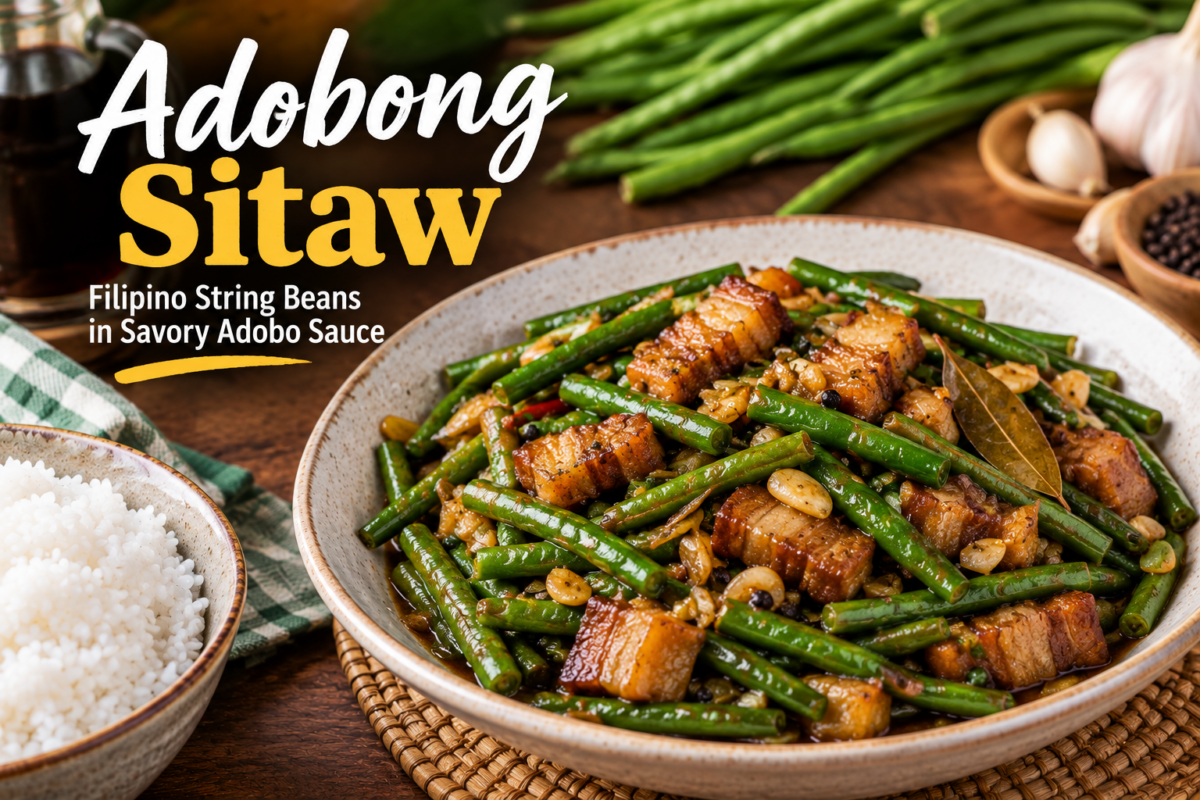
A Delicious Filipino Dish Made with String Beans
Filipino cuisine has many dishes that transform simple vegetables into flavorful meals. One excellent example is adobong sitaw, a home-style dish made with long green beans cooked in a savory and tangy adobo sauce.
In the Philippines, sitaw refers to yardlong beans, a long, slender vegetable commonly sold in public markets and grocery stores. It is used in many Filipino dishes, including sinigang, pinakbet, ginisang gulay, and various stir-fried preparations. When cooked adobo-style, sitaw absorbs the familiar flavors of garlic, vinegar, soy sauce, and black pepper.
Unlike chicken or pork adobo, which often needs a longer simmer, adobong sitaw can be prepared relatively quickly. The beans cook in just a few minutes, making this dish a practical choice for busy families, students, and anyone looking for an affordable Filipino meal.
Adobong sitaw can be made with vegetables alone, but many home cooks add pork belly or ground pork for extra flavor. Tofu is another option for people who want a meat-free version. Some cooks prefer a saucy preparation, while others stir-fry the beans over high heat to preserve their color and crisp texture.
There is no single recipe that every household follows. The choice of meat, the amount of vinegar, and the cooking method can vary depending on personal preference and the ingredients available.
In this guide, you will learn what adobong sitaw is, how to prepare it step by step, how to keep the beans tender-crisp, and how to create variations for different tastes and dietary preferences.
What Is Adobong Sitaw?
Adobong sitaw is a Filipino vegetable dish made by cooking yardlong beans with seasonings associated with adobo. Its main ingredients typically include sitaw, garlic, soy sauce, vinegar, and black pepper.
Depending on the recipe, it may also contain onion, pork, fish sauce, sugar, or other seasonings. Water or broth is sometimes added to create a sauce that coats the beans.
The dish combines two important qualities: the fresh, slightly sweet taste of long beans and the savory, tangy flavor of adobo seasoning.
The beans are usually cut into shorter lengths before cooking. This makes them easier to stir, serve, and eat. They absorb the seasoning while retaining some firmness when cooked correctly.
Adobong sitaw is often served as a vegetable side dish with rice and a main course. However, when prepared with pork or tofu, it can also become a satisfying main dish.
One of its biggest advantages is its versatility. You can prepare it with just a few ingredients, adjust the sauce to your taste, and add protein if you want a more substantial meal.
What Is Sitaw Called in English?
Sitaw is commonly called yardlong beans or long beans in English. It is a legume grown for its long, edible green pods.
Although it is sometimes described as a type of string bean, yardlong beans are botanically distinct from the common green beans often sold in Western supermarkets. Their pods can grow considerably longer, and they are widely used in Southeast Asian cooking.
In Filipino markets, sitaw is often sold in bundles. Fresh pods should generally be firm, green, and flexible rather than dry, yellowing, or heavily swollen with mature seeds.
For adobong sitaw, younger, tender pods are a good choice because they cook quickly and are less likely to have tough fibers.
If you cannot find sitaw, regular green beans can be used as a substitute. However, they have a different texture and may need a slightly different cooking time.
Why Adobong Sitaw Is Popular in Filipino Home Cooking
An affordable everyday vegetable
Sitaw is a familiar ingredient in Philippine markets, making it a practical option for everyday meals. Adobong sitaw can be prepared without expensive ingredients, and a small amount of pork or tofu can make it more filling.
The recipe is also easy to adjust according to a household’s budget. A vegetable-only version needs fewer ingredients, while a version with pork can provide additional richness and protein.
A flexible way to prepare vegetables
Adobong sitaw demonstrates how the familiar adobo flavor profile can be used with vegetables as well as meat.
The same basic seasonings—garlic, vinegar, soy sauce, and pepper—can be adapted to different ingredients. The cooking time simply needs to match the vegetable being used.
The Philippine Department of Science and Technology’s Food and Nutrition Research Institute has published a recipe for adobong langka at sitaw, combining unripe jackfruit and long beans in an adobo-style preparation. This is another example of how vegetables can be combined with the familiar seasoning method. See the FNRI Menu Guide Calendar.
A dish that pairs well with rice
Adobong sitaw is especially good with steamed white rice. The rice absorbs the savory sauce, while the beans add texture and a fresh vegetable component to the meal.
It can be served alongside fried fish, grilled chicken, pork dishes, or tofu. It is also a convenient option when you want to prepare a vegetable dish without spending a long time in the kitchen.
Easy Adobong Sitaw Recipe
This recipe makes a home-style version of Filipino string bean adobo with pork. The pork adds richness, while the beans provide a tender-crisp texture.
Preparation time: 10 minutes
Cooking time: 20–30 minutes
Servings: 4
Difficulty: Easy
Ingredients
- 500 g fresh sitaw, washed and cut into 2–3-inch pieces
- 150–200 g pork belly or pork shoulder, thinly sliced
- 1–2 tablespoons cooking oil, as needed
- 6 cloves garlic, minced or crushed
- 1 small onion, sliced (optional)
- 3 tablespoons soy sauce
- 2 tablespoons cane vinegar or white vinegar
- ½ cup water, adding more if needed
- ½ teaspoon whole or ground black pepper
- 1 teaspoon brown sugar, optional
- Salt, only if needed
- 1–2 long green chilies, optional
For a vegetarian version: Omit the pork and use tofu or mushrooms instead. Adjust the cooking oil and seasonings to your preference.
Step 1: Prepare the sitaw
Wash the beans thoroughly under clean running water. Trim the ends and cut the pods into pieces approximately 2–3 inches long.
Try to keep the pieces a similar size so they cook evenly.
Inspect the beans and remove any pods that are badly damaged or spoiled. Fresh, tender beans are ideal because they cook quickly and retain a pleasant texture.
Set the prepared sitaw aside while you cook the pork and seasonings.
Step 2: Cook the pork
Heat a wide pan or wok over medium heat. Add the pork belly and cook until the fat begins to render and the pieces start to brown.
If you are using a leaner cut of pork, add a little cooking oil to prevent sticking. Stir occasionally so the meat browns evenly.
If you prefer to use ground pork, break it into small pieces as it cooks.
Cook the pork thoroughly before adding the beans. Since sitaw cooks quickly, it is better to make sure the meat is ready first.
Step 3: Add the garlic and onion
Add the garlic to the pan and sauté until fragrant. If using onion, add it and cook until softened.
Avoid burning the garlic, as it can create a bitter flavor that affects the whole dish.
The rendered pork fat, garlic, and onion create a flavorful base for the adobo sauce.
Step 4: Add the soy sauce and vinegar
Pour in the soy sauce and vinegar. Add the water and black pepper.
Bring the mixture to a boil, allowing the vinegar to boil briefly before stirring if you prefer that traditional adobo-style technique.
Lower the heat and simmer for a few minutes to combine the flavors. If you want a slightly sweeter sauce, add the optional brown sugar.
Taste carefully before adding salt because soy sauce already contributes saltiness.
Step 5: Add the sitaw
Add the cut beans to the pan and toss them until they are coated in the sauce.
Cook for approximately 5–8 minutes, depending on the thickness and freshness of the beans and how tender you like them. Stir occasionally to ensure that the pieces cook evenly.
For a crispier texture, cook them for less time. For softer beans, allow a few extra minutes, checking frequently to prevent overcooking.
If the pan becomes too dry before the beans are tender, add a small amount of water.
Step 6: Adjust the sauce
Once the beans reach your preferred texture, taste the sauce.
If it is too salty or concentrated, add a little water. If it is too watery, simmer uncovered for a short time until some of the liquid evaporates.
Adjust the seasoning with black pepper, vinegar, or a little soy sauce as necessary. Make small changes rather than adding large amounts at once.
The finished dish should have a savory, tangy flavor without overpowering the natural taste of the sitaw.
Step 7: Serve hot
Transfer the adobong sitaw to a serving dish. Spoon the pork and sauce over the beans so each serving receives some of the seasoning.
Serve immediately with steamed white rice. You can also garnish it with sliced green onion or fried garlic if desired.
Tips for Making the Best Adobong Sitaw
Choose fresh, tender beans
Fresh sitaw generally cooks more evenly and has a pleasant texture. Look for pods that are green and firm, without excessive yellowing or large, prominent seeds.
Very mature beans may have tougher fibers and need more cooking time.
Avoid overcooking the beans
One of the most common problems with adobong sitaw is beans that become too soft. The goal is to cook them until tender while retaining some bite.
Start checking after about five minutes. If you prefer a softer texture, continue cooking in short intervals.
Cook the meat before adding the vegetables
Pork requires considerably more cooking time than sitaw. Cooking the meat first prevents the beans from becoming mushy while the pork finishes cooking.
If you are using leftover cooked pork, add it to the sauce and heat it thoroughly before adding the sitaw.
Use a wide pan
A wide pan allows the beans to spread out and come into contact with the hot cooking surface. This makes stirring easier and helps the beans cook more evenly.
Avoid overcrowding the pan. If you are doubling the recipe, use a larger wok or cook in batches.
Balance the vinegar and soy sauce
Soy sauce contributes saltiness and depth, while vinegar gives the dish its characteristic tang. The best balance depends on the vinegar you use and your personal taste.
Start with the suggested measurements and adjust gradually after tasting.
Decide whether you want a saucy or dry version
Some versions of adobong sitaw have a generous amount of sauce, while others are prepared more like a stir-fry.
For a saucier dish, retain more liquid. For a drier version, allow the sauce to reduce and coat the beans before serving.
Popular Variations of Adobong Sitaw
One reason adobong sitaw is useful in everyday cooking is that it can be adapted to different ingredients and preferences.
1. Adobong Sitaw with Pork Belly
Pork belly is a common addition because its fat enriches the sauce. As the pork cooks, it releases fat that combines with the garlic, soy sauce, and vinegar.
For a less rich dish, use pork shoulder or a leaner cut. Trim excess fat if desired, and cook the pork thoroughly before adding the beans.
2. Adobong Sitaw with Ground Pork
Ground pork makes a convenient alternative to sliced pork belly. It distributes throughout the dish, so each serving contains small pieces of meat.
Brown the ground pork with the garlic and onion before adding the seasonings. Break up large clumps with a spatula so it cooks evenly.
This version is practical for family meals and works well with rice.
3. Adobong Sitaw with Tofu
Tofu provides a meat-free alternative that can make the dish more filling.
Cut firm tofu into cubes and pan-fry until golden. Set it aside, prepare the adobo sauce, and cook the sitaw until tender-crisp. Add the tofu near the end and toss gently to coat it in the sauce.
For a fully plant-based version, check that your soy sauce and any other seasonings meet your dietary requirements. Avoid fish sauce or oyster sauce if you want the dish to remain vegan.
4. Adobong Sitaw with Oyster Sauce
Some modern home-style recipes use oyster sauce to add savory depth. This produces a variation rather than the simplest traditional seasoning combination.
Because oyster sauce is already salty, reduce the amount of soy sauce and taste before adding extra seasoning.
Oyster sauce contains shellfish, so it is unsuitable for people with shellfish allergies. A plant-based mushroom sauce can be used instead, although the flavor will differ.
5. Adobong Sitaw with Jackfruit
Unripe jackfruit, or langka, can be combined with sitaw in an adobo-style dish. The jackfruit adds a substantial texture, while the beans provide a fresh green element.
The FNRI has published a recipe for adobong langka at sitaw with chicken, soy sauce, vinegar, bay leaves, and black pepper. See the FNRI recipe and preparation guide.
Because jackfruit takes longer to soften than sitaw, cook it first and add the beans later. This helps preserve the texture of the long beans.
6. Spicy Adobong Sitaw
For a spicy version, add sliced long green chilies or a small amount of bird’s-eye chili.
You can sauté the chili with the garlic or add it while the sauce simmers. Start with a small quantity and adjust according to your preferred heat level.
The chili should complement the savory and tangy sauce rather than overpower it.
7. Adobong Sitaw Without Meat
A simple vegetable-only version is an affordable option for people who want to reduce meat consumption.
Sauté garlic in a small amount of oil, add soy sauce, vinegar, water, and pepper, then cook the sitaw until tender-crisp. You can add mushrooms or tofu if you want more texture.
This version still delivers the familiar adobo flavors without requiring pork or other meat.
Is Adobong Sitaw Healthy?
Sitaw is a vegetable that contributes dietary fiber and several vitamins and minerals to a meal. Including it in your diet can help increase vegetable variety.
However, the nutritional profile of adobong sitaw depends on the ingredients and serving size. Pork belly increases the fat content, while soy sauce can contribute substantial sodium. Added oil and sugar also affect the final nutritional value.
For a lighter preparation, consider these adjustments:
- Use less cooking oil.
- Choose lean pork or omit the meat.
- Use tofu as an alternative protein.
- Measure the soy sauce rather than pouring it in freely.
- Add water to create more sauce without adding more soy sauce.
- Serve with other vegetables as part of a varied meal.
Adobong sitaw can be part of a balanced diet, but it should not automatically be described as low-sodium or low-fat. Those qualities depend on the specific recipe.
Common Mistakes to Avoid
Overcooking the sitaw: Long beans can become too soft if left in the pan for too long. Check the texture regularly and stop cooking when they reach your preference.
Adding the beans before the meat is ready: Pork takes longer to cook than sitaw. Finish cooking the meat before adding the vegetable.
Using too much soy sauce: Excess soy sauce can make the dish too salty and overpower the natural flavor of the beans.
Adding too much vinegar: Vinegar is essential to the adobo flavor, but the sauce should remain balanced. Adjust the amount according to the vinegar’s strength and your taste.
Using old or tough beans: Mature pods may have a fibrous texture. Choose fresh beans when possible and allow extra cooking time if necessary.
Adding too much water: Excess water can dilute the sauce. Start with a modest amount and add more only when needed.
What to Serve with Adobong Sitaw
Adobong sitaw pairs naturally with steamed white rice. The rice absorbs the sauce, while the beans provide a vegetable component to the meal.
It also works well with:
- Fried or grilled fish
- Grilled chicken
- Pork barbecue
- Fried tofu
- Simple Filipino vegetable soups
- Other sautéed vegetables
For a quick lunch or dinner, serve adobong sitaw with rice and fried fish. For a more substantial meal, prepare it with pork belly or ground pork. For a meat-free option, serve it with tofu and another vegetable dish.
Because the dish cooks quickly, it is particularly convenient when you need a vegetable side to accompany a meal that is already prepared.
Frequently Asked Questions About Adobong Sitaw
1. What is adobong sitaw in English?
Adobong sitaw can be translated as Filipino string bean adobo or yardlong bean adobo. It is a dish made with long beans cooked in a sauce flavored with ingredients such as garlic, vinegar, soy sauce, and black pepper.
2. What is sitaw called in English?
Sitaw is commonly called yardlong beans or long beans. It is a long green pod used in many Southeast Asian and Filipino dishes.
3. Can I cook adobong sitaw without pork?
Yes. You can prepare it with only sitaw, garlic, vinegar, soy sauce, and pepper. Tofu or mushrooms can be added if you want a more filling meat-free version.
4. How long should I cook sitaw?
The beans generally need around 5–8 minutes in the sauce, depending on their thickness and your preferred texture. Check them frequently so they do not become too soft.
5. Can I use regular green beans instead of sitaw?
Yes. Regular green beans can be used if yardlong beans are unavailable. They have a different texture and may require a slightly different cooking time, so check for tenderness as you cook.
6. Why is my adobong sitaw too salty?
Too much soy sauce or an overly reduced sauce can make the dish salty. Add a little water, stir, and taste again. For future batches, begin with less soy sauce and adjust near the end.
7. Can I add oyster sauce to adobong sitaw?
Yes. Oyster sauce appears in some modern recipes and adds savory depth. Because it is salty, reduce the soy sauce accordingly. It is not suitable for people with shellfish allergies.
8. Can I prepare adobong sitaw ahead of time?
You can prepare it ahead, but the beans may soften during storage and reheating. For the best texture, cook them until tender-crisp and refrigerate leftovers promptly in a covered container.
9. What is the difference between adobong sitaw and pork adobo with sitaw?
Adobong sitaw usually puts the long beans at the center of the dish, with meat as an optional addition. Pork adobo with sitaw starts with pork adobo and adds beans to the meat and sauce. In everyday cooking, the two preparations can overlap.
10. Is adobong sitaw a main dish or a side dish?
It can be both. A vegetable-only version is often served as a side dish, while a version with pork or tofu can be served as a main dish with rice.
Conclusion: A Simple Filipino Dish Worth Adding to Your Meal Plan
Adobong sitaw shows how familiar Filipino seasonings can turn a simple vegetable into a delicious everyday dish. With fresh long beans, garlic, vinegar, soy sauce, and a few basic seasonings, you can create a meal that is flavorful, affordable, and easy to prepare.
The recipe is flexible enough to suit different preferences. You can prepare it with pork belly for a richer flavor, ground pork for convenience, tofu for a meat-free option, or jackfruit for a more substantial vegetable combination.
The key to making good adobong sitaw is simple: choose fresh beans, cook the meat thoroughly before adding the vegetables, and avoid overcooking the sitaw. Balance the vinegar and soy sauce so the finished dish remains savory and tangy rather than overly salty.
Serve it with steamed rice and your favorite Filipino main dish, or enjoy it as a simple meal on its own. Adobong sitaw is another reminder that Filipino cooking does not need complicated ingredients to be satisfying.
References and Further Reading
- MAGGI Philippines — Adobong Sitaw Recipe — A saucy preparation using long beans and pork.
- Pepper.ph — Adobong Sitaw — A version that cooks the beans separately to preserve their texture.
- Panlasang Pinoy — Adobong Sitaw Recipe — A home-style recipe with pork and long beans.
- Kawaling Pinoy — Adobong Sitaw with Pork — A pork-based version of the dish.
- GMA Network — Adobong Sitaw with Tofu — A variation combinin