How to Travel the Philippines on a Budget: 12 Money-Saving Tips
Introduction
Traveling around the Philippines does not have to be expensive. With its beautiful beaches, charming towns, stunning mountains, and delicious local food, the country offers plenty of opportunities for travelers who want to enjoy an unforgettable adventure without spending too much money.
From exploring Cebu’s waterfalls to enjoying Bohol’s countryside, relaxing on a beach in Siquijor, or discovering the natural beauty of Palawan, there are many ways to experience the Philippines while staying within your budget.
The secret is knowing where to save money, when to book transportation, and how to plan your itinerary wisely.
In this guide, we will share 12 practical budget travel tips to help you save money while exploring the Philippines. Whether you are a local traveler, a backpacker, a couple planning a holiday, or a foreign visitor discovering the country for the first time, these tips can help you make the most of your travel budget.
1. Plan Your Travel Budget Before Leaving
One of the easiest ways to avoid overspending is to establish a realistic travel budget before your trip.
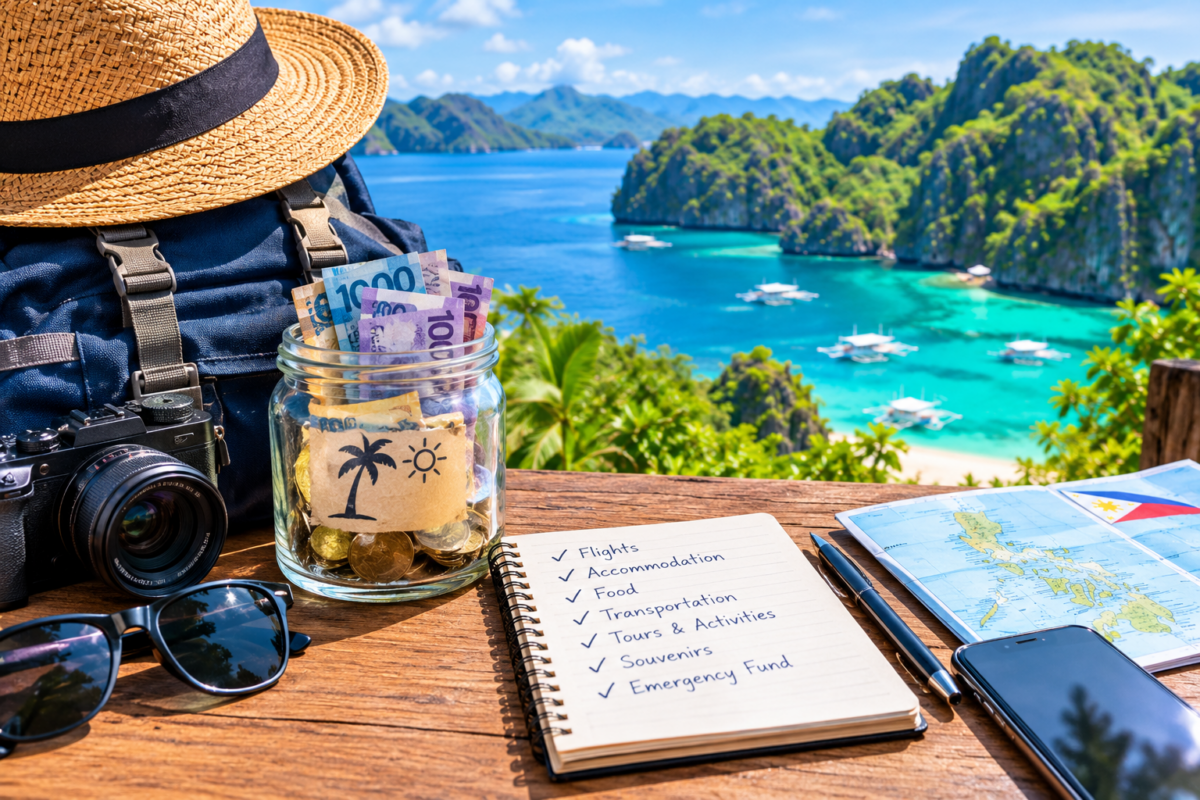
Start by estimating the cost of transportation, accommodation, food, entrance fees, activities, and other expenses. Remember to include an emergency fund for unexpected delays or changes in your plans.
You can divide your budget into three categories:
- Essential expenses: Transportation, accommodation, meals, and basic necessities.
- Activities and experiences: Tours, entrance fees, snorkeling, island hopping, and sightseeing.
- Emergency funds: Unexpected expenses, medical needs, or transportation changes.
For example, if you are planning a three-day trip, decide how much you can comfortably spend each day. Keep track of your actual expenses so you can adjust your spending when necessary.
You do not need to visit every attraction or participate in every activity. Choose the experiences that matter most to you and build your budget around them.
2. Travel During Less Busy Periods
Travel dates can significantly affect your expenses. During public holidays, school vacations, long weekends, and major festivals, transportation and accommodation may become more expensive.
If your schedule is flexible, compare prices for different dates before booking.
Traveling during quieter periods can sometimes help you find better accommodation deals and less crowded attractions. However, check seasonal weather conditions before choosing your dates, especially if your plans involve island hopping or outdoor activities.
The rainy season can bring lower prices in some destinations, but it can also cause cancellations and delays. A cheaper booking may not be worth it if the weather prevents you from enjoying your planned activities.
Budget tip: Compare the total cost of your trip rather than looking only at the cheapest flight or hotel rate.
3. Compare Domestic Flights, Buses, and Ferries
The Philippines is an archipelago, so transportation can take up a large part of your travel budget.
Domestic flights are convenient for covering long distances, but buses and ferries may be more economical for certain routes.
Before booking, compare the available options and consider the total journey time.
For example, traveling between Cebu and a nearby island may involve a ferry, while reaching a distant destination such as Palawan may be more practical by air, depending on your starting point.
When comparing transportation, remember to include baggage fees, terminal transfers, meals during long journeys, and other additional costs.
Here are some ways to save:
- Book tickets early when prices and schedules are suitable.
- Compare the final price, including baggage allowances.
- Check official ferry operators for schedules and fares.
- Use public transportation where practical and safe.
- Avoid tight connections that could lead to expensive last-minute changes.
Always check current schedules before traveling because routes and departure times can change.
4. Choose Affordable Accommodation
Accommodation does not need to be luxurious to make your vacation enjoyable.
Depending on your destination, you may find budget hotels, guesthouses, hostels, homestays, or family-run inns that offer comfortable places to stay.
Before making a reservation, compare prices and read recent guest reviews. Pay attention to cleanliness, location, security, transportation access, and additional charges.
A hotel with a slightly higher nightly rate may actually save money if it is close to the attractions you plan to visit.
If you are traveling with friends or family, compare the total cost of a shared room with the cost of booking separate rooms.
Consider these accommodation tips:
- Reserve early during popular travel periods.
- Look for places that include breakfast when it provides good value.
- Check whether air-conditioning, Wi-Fi, and other facilities are included.
- Review cancellation policies before paying.
- Choose reputable properties with clear booking information.
Avoid sending money to an unverified accommodation provider simply because the offer seems unusually cheap.
5. Eat Local Filipino Food
Food is one of the best parts of traveling around the Philippines, and eating at local restaurants can be an affordable way to experience Filipino culture.
Instead of dining exclusively at expensive tourist restaurants, explore reputable neighborhood eateries, carinderias, and local food markets.
Depending on the region, you can enjoy dishes such as adobo, sinigang, pancit, tinola, grilled fish, and other local specialties.
Trying regional food can also make your trip more memorable because different communities have their own ingredients, cooking traditions, and specialties.
To manage your food budget:
- Eat at clean, well-reviewed local establishments.
- Ask about prices before ordering unfamiliar dishes.
- Choose filling local meals instead of frequent expensive snacks.
- Carry a reusable water bottle and refill it where safe drinking water is available.
- Set aside a little money to try special regional dishes.
Budget travel does not mean missing out on good food. Sometimes, a simple meal prepared by a local cook becomes one of the highlights of the trip.
6. Visit Destinations With Affordable Activities
Some destinations offer plenty of enjoyable experiences without requiring expensive tours.
For example, you can explore public beaches, walk around heritage districts, visit local markets, enjoy mountain viewpoints, or discover community attractions.
Here are a few destinations worth researching for a budget-friendly trip:
Cebu: Explore selected public beaches, historical landmarks, local markets, and countryside attractions. Remember that transportation to distant waterfalls and beaches can add to your costs.
Bohol: Enjoy countryside scenery, explore local towns, and choose which paid attractions are most important to you.
Siquijor: Discover coastal scenery, visit selected natural attractions, and enjoy a relaxed island atmosphere. Include ferry tickets and island transportation in your budget.
Iloilo City: Explore heritage architecture, sample local food, and enjoy public spaces while discovering the city’s culture.
Baguio: Visit parks, walk through selected attractions, explore local markets, and enjoy the cooler mountain climate.
Costs vary by season, travel style, and location. Research current entrance fees and transportation costs before deciding which destination offers the best value for you.
7. Be Selective With Island-Hopping Tours
Island hopping is a popular activity in destinations such as Palawan, Cebu, and Siargao. It allows travelers to discover lagoons, beaches, snorkeling areas, and scenic islands.
However, joining several tours during one trip can quickly increase your expenses.
Before booking, compare tour itineraries and determine which experiences interest you most.
Ask whether the quoted price includes boat transportation, environmental or entrance fees, meals, snorkeling equipment, and other charges.
If you are traveling with a group, ask reputable operators whether a shared tour is available. Sharing a tour may be more affordable than arranging a private boat.
Choose operators that follow local safety regulations, provide appropriate safety equipment, and respect marine environments.
Remember that the lowest-priced tour is not always the best choice. Safety, reliability, and the quality of the experience are important too.
8. Use Public Transportation When Practical
Public transportation can help you reduce travel costs, especially in cities and larger towns.
Depending on the location, options may include jeepneys, buses, public ferries, and tricycles. Ride-hailing services and taxis may also be useful when public transportation is unavailable or inconvenient.
Before taking local transportation, familiarize yourself with the route and usual fare where possible.
For tricycles and other vehicles without clearly displayed fares, agree on the price before starting your journey.
If you are visiting several attractions in one day, compare the cost of individual trips with a shared tour or a properly arranged day rental. The best option depends on the distance, group size, and local transport rates.
Avoid walking long distances on unfamiliar roads simply to save a small amount of money, especially in extreme heat or areas without safe pedestrian paths.
9. Pack Light and Avoid Unnecessary Purchases
Packing carefully can help you avoid extra baggage fees and unnecessary shopping during your trip.
Make a checklist before leaving home and bring versatile clothing suitable for the weather and planned activities.
Useful items include comfortable walking shoes, lightweight clothing, sun protection, a reusable water bottle, a power bank, and a rain jacket.
If you plan to visit beaches and waterfalls, consider bringing swimwear and a waterproof pouch for your phone.
Check airline baggage restrictions before packing. A bag that exceeds the permitted weight or size may result in additional charges.
It is also helpful to bring personal essentials you know you will need rather than purchasing them at tourist areas, where prices may be higher.
However, do not compromise on important safety equipment or necessary medication just to reduce your spending.
10. Take Advantage of Free Attractions
You do not need to pay an entrance fee for every activity to enjoy a destination.
Many Philippine cities and towns have public parks, scenic coastal areas, historical streets, local markets, and cultural events that visitors can explore for little or no cost.
Depending on local access rules, you might enjoy a sunset walk, photograph traditional architecture, explore a public plaza, or spend time discovering a neighborhood’s food and culture.
Before visiting an attraction, check whether there are entrance fees, parking charges, or restrictions on photography.
For beaches and natural areas, confirm that public access is permitted. Some locations are privately managed or protected, and visitors may need to pay a fee or follow specific rules.
A good itinerary combines a few paid experiences with free or low-cost activities.
11. Avoid Common Tourist Spending Mistakes
Small expenses can add up quickly during a vacation.
Buying unnecessary souvenirs, booking activities without comparing prices, taking unplanned private transportation, and paying for attractions you do not really want to visit can stretch your budget.
Before spending money, ask yourself whether the activity fits your interests and available funds.
Here are some common mistakes to avoid:
- Booking the first available tour without comparing reputable providers.
- Forgetting to include baggage and transfer fees.
- Carrying too little cash for places that do not accept digital payments.
- Exchanging money without checking the total fees and exchange rate.
- Booking accommodation far from attractions without considering transportation costs.
- Ignoring cancellation policies and weather-related risks.
Keep a small record of your daily expenses using a notebook or mobile app. This helps you identify where your money goes and adjust your plans before you exceed your budget.
12. Travel Slowly and Enjoy Each Destination
One of the most effective ways to save money is to avoid visiting too many destinations in a short period.
Every transfer can involve transportation fares, meals, accommodation changes, and time spent waiting at terminals.
Instead of trying to explore several distant islands during a short vacation, choose one region and discover it at a comfortable pace.
For example, a traveler spending five days in Cebu could focus on selected city attractions and nearby countryside destinations rather than adding several distant islands to the same itinerary.
Another traveler might spend a few days exploring Bohol before moving to another destination.
Slow travel allows you to understand local culture, enjoy regional food, and spend more time experiencing the places you visit.
It also leaves room for unexpected discoveries without requiring you to reorganize your entire trip.
Sample Budget-Friendly Three-Day Travel Plan
Here is a simple example of how to organize a short trip without filling every day with expensive activities.
Day 1: Explore the town
- Arrive and check in to your accommodation.
- Visit public attractions or historical areas.
- Eat at a local restaurant.
- Enjoy an evening walk in a suitable public area.
Day 2: Enjoy a main attraction
- Choose one major activity, such as a guided countryside trip or an island excursion.
- Check all additional fees before booking.
- Enjoy an affordable local meal.
- Keep the evening free to rest or explore nearby places.
Day 3: Discover local culture
- Visit a market or cultural attraction.
- Buy a few locally made souvenirs if they fit your budget.
- Leave enough time for your return journey.
Your actual expenses will depend on your destination, accommodation, and travel dates, so prepare a separate budget for transportation, meals, and activities before leaving.
Frequently Asked Questions
Is the Philippines affordable for budget travelers?
The Philippines can suit different budgets. Travelers can reduce expenses by choosing affordable accommodation, eating local food, comparing transportation options, and selecting activities carefully. Costs vary significantly between destinations.
What is the cheapest way to travel around the Philippines?
There is no single cheapest option for every route. Buses and ferries can be economical for some journeys, while domestic flights may offer better value for distant destinations. Compare the complete cost and travel time before booking.
How can I save money on hotels in the Philippines?
Compare reputable accommodations, read recent reviews, book when suitable rates are available, and consider guesthouses or hostels. Check the location and additional charges before choosing a room.
Is street food a good option for budget travelers?
Street food can be affordable and delicious. Choose busy, reputable vendors that prepare food hygienically, and be cautious with food that has been stored improperly or exposed to unsafe temperatures.
Can I enjoy the Philippines without joining expensive tours?
Yes. Many destinations offer public parks, local markets, historical areas, scenic walks, and other low-cost experiences. For activities involving boats, remote locations, or protected areas, follow local access rules and safety guidance.
Should I carry cash when traveling around the Philippines?
It is sensible to carry some Philippine pesos because smaller businesses and remote destinations may not accept cards or digital payments. Keep cash secure and use reputable ATMs or money changers.
Conclusion
Traveling the Philippines on a budget is possible with careful planning and flexible expectations.
By comparing transportation options, choosing suitable accommodation, enjoying local food, and balancing paid tours with free activities, you can discover the country’s natural beauty and rich culture without unnecessary spending.
The most important thing is to plan around the experiences you value most. You do not need an expensive resort or a packed itinerary to create wonderful travel memories.
Whether you are exploring Cebu, enjoying Bohol’s countryside, discovering Siquijor, or relaxing along a beautiful Philippine coastline, thoughtful decisions can help your travel money go further.
Travel smart, spend wisely, and enjoy more of the Philippines!