Adobong Kangkong: The Simple and Flavorful Filipino Water Spinach Adobo
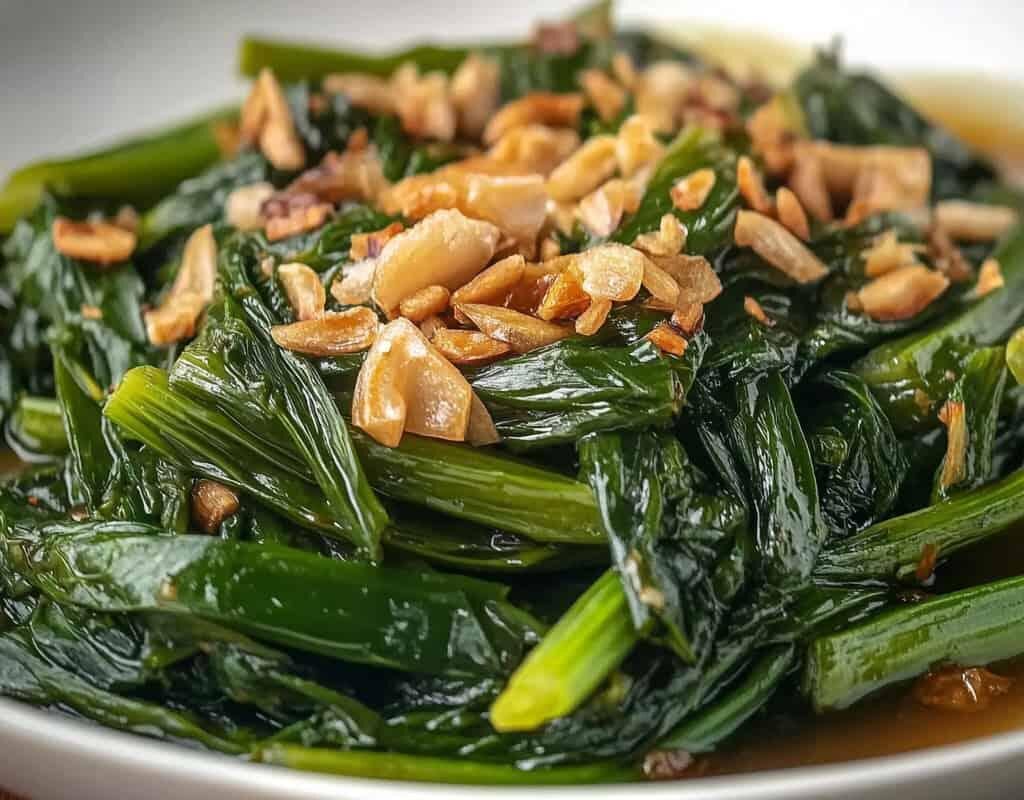
A Simple Filipino Dish Full of Flavor
Filipino cuisine is known for hearty meals, comforting stews, and dishes that transform everyday ingredients into something delicious. Among these favorites is adobo, a cooking style commonly associated with vinegar, garlic, pepper, and other seasonings. Although many people think of chicken or pork when they hear the word adobo, the dish can also be made with vegetables.
One popular vegetable version is adobong kangkong, a simple Filipino dish made with water spinach cooked in a savory, tangy adobo-style sauce. It combines fresh green leaves and tender stems with garlic, soy sauce, vinegar, and black pepper. The result is a flavorful dish that can be served as a side to meat or fish, or enjoyed as an affordable meal with steamed rice.
Kangkong is a familiar leafy vegetable in the Philippines. It is widely used in home cooking because it is versatile and works well in soups, stir-fries, and vegetable dishes. In adobong kangkong, its mild flavor allows it to absorb the seasoning while its stems provide a pleasant bite.
The dish is also practical. It does not require expensive ingredients, and it cooks quickly compared with meat-based adobo. This makes it a useful option for busy households, students, and anyone looking for a simple vegetable dish.
Adobong kangkong is not just one fixed recipe. Some cooks prepare it with a little sauce, while others make a drier version. Some add pork, tofu, or other vegetables. In parts of Western Visayas, a related dish called apan-apan combines kangkong with adobo-style seasoning and may include fried pork.
In this article, you will learn what adobong kangkong is, how it fits into Filipino food culture, how to prepare it at home, and how to adapt it to suit your taste.
What Is Adobong Kangkong?
Adobong kangkong is a Filipino vegetable dish in which kangkong is cooked using flavors associated with adobo. The main ingredients are usually water spinach, garlic, vinegar, soy sauce, cooking oil, and black pepper.
Kangkong is known in English as water spinach or water morning glory. Its scientific name is Ipomoea aquatica. Despite its English name, it is not the same plant as the common European spinach found in many supermarkets.
The vegetable has long, hollow stems and tender green leaves. Both parts are commonly eaten, although they need slightly different cooking times. The stems are firmer and take longer to soften, while the leaves wilt quickly.
The basic cooking process is straightforward:
- Garlic is sautéed in oil until fragrant.
- Soy sauce, vinegar, and sometimes water are added to create the seasoning liquid.
- The thicker kangkong stems are cooked first.
- The leaves are added near the end so they do not become overly soft.
- Black pepper and other seasonings are adjusted before serving.
The finished dish has a savory, salty, and tangy flavor. Its sauce is absorbed by the vegetables, making each bite flavorful without requiring a long cooking process.
Unlike chicken or pork adobo, adobong kangkong does not need to simmer for a long time. In fact, overcooking can make the leaves limp and cause the vegetable to lose its fresh texture.
The dish can be served as a vegetable side dish or as a simple main meal with rice. It is also easy to customize with tofu, mushrooms, or small amounts of meat.
Kangkong in Filipino Food Culture
A familiar vegetable in everyday cooking
Kangkong is widely used in Filipino kitchens. It appears in several well-known dishes, including sinigang, stir-fried vegetable preparations, crispy kangkong, and adobong kangkong.
The Cultural Center of the Philippines’ CulturEd: Philippine Cultural Education Online entry on kangkong describes it as a vegetable that can grow in water or on land and is commonly prepared with garlic, onion, vinegar, and soy sauce. This combination is known as adobong kangkong. The reference also notes that kangkong is used in sour soups and other Filipino dishes. Read more about kangkong from CulturEd.
Its versatility makes it useful for everyday cooking. A single bunch can be turned into a quick vegetable side dish, added to a soup, or combined with other ingredients to create a more substantial meal.
An affordable and practical dish
Adobong kangkong is often appreciated for its simplicity. A cook can prepare it with a small number of ingredients that are commonly available in Philippine markets.
The dish also offers flexibility. If kangkong is plentiful, it can become the main vegetable in a family meal. If a household has leftover cooked meat, a small portion can be added to make the dish more filling.
This flexibility reflects an important feature of home cooking: recipes are often adjusted to what is available, what the family enjoys, and how much time there is to prepare a meal.
A vegetable version of adobo
The National Nutrition Council includes adobong kangkong among the different variations of Filipino adobo. It describes the dish as kangkong cooked with the usual adobo sauce and presents it as an affordable recipe idea for families. Read the National Nutrition Council’s discussion of adobo variations.
Adobong kangkong shows that adobo is not limited to meat. The familiar balance of vinegar, garlic, and seasoning can also work with vegetables, producing a dish with a distinct texture and a much shorter cooking time.
What Is the Difference Between Kangkong and Spinach?
Although kangkong is often called water spinach, it is botanically different from common spinach.
Kangkong has long, hollow stems and narrow or arrow-shaped leaves. Common spinach has a different leaf structure and does not usually have the same hollow stems.
The difference matters when cooking because kangkong stems can stay pleasantly firm while the leaves become tender. A good adobong kangkong takes advantage of these two textures by adding the stems before the leaves.
Kangkong also has a mild flavor that works well with strong seasonings. Garlic, soy sauce, and vinegar coat the vegetable without completely hiding its natural taste.
If you cannot find kangkong, you can experiment with other leafy vegetables. However, the final texture and cooking time will differ, so the substitute should not be expected to taste exactly the same.
Easy Adobong Kangkong Recipe
This recipe makes a straightforward version of Filipino water spinach adobo. It uses soy sauce, vinegar, garlic, and black pepper, with the option to add a little water for a saucier result.
Preparation time: 5–10 minutes
Cooking time: 10–15 minutes
Servings: 3–4
Difficulty: Easy
Ingredients
- 1 large bunch kangkong, approximately 300–400 g
- 3 tablespoons cooking oil
- 6–8 cloves garlic, minced or chopped
- 1 small onion, sliced (optional)
- ¼ cup soy sauce
- ⅛ cup vinegar
- ¼–½ cup water, as needed
- ½ teaspoon ground black pepper, or to taste
- 1 teaspoon sugar, optional
- Salt, only if needed
- 1–2 long green chilies, optional
Optional additions:
- 100–150 g firm tofu, cubed and lightly fried
- 100 g cooked pork, chopped
- A small amount of sliced mushrooms
Step 1: Clean the kangkong
Rinse the kangkong thoroughly under clean running water to remove dirt and debris.
Trim away any damaged or overly tough sections. Separate the leaves from the thicker stems, then cut the stems into pieces about 2–3 inches long.
Keep the leaves in a separate pile. This makes it easier to cook the stems first and add the leaves later.
Drain the vegetable well. Excess water can dilute the sauce and cause the oil to splatter when the kangkong is added to the pan.
Step 2: Sauté the garlic
Heat the cooking oil in a wide pan or wok over medium heat.
Add the garlic and sauté until fragrant and lightly golden. If you are using onion, add it and cook until it begins to soften.
For extra flavor and texture, you can remove a spoonful of the golden garlic and reserve it for garnish. Be careful not to burn the garlic, because burnt pieces can make the dish bitter.
Step 3: Add the soy sauce and vinegar
Pour the soy sauce and vinegar into the pan. Add the water if you want a little more sauce.
Allow the mixture to come to a boil. You can let the vinegar boil briefly before stirring, following a common approach used in some adobo recipes.
Add the optional sugar if you prefer a slightly rounder flavor. Sugar is not essential, and the dish can be prepared without it.
Step 4: Cook the kangkong stems
Add the cut kangkong stems to the pan first. Stir to coat them with the sauce.
Cook for approximately 1–2 minutes, depending on their thickness. The stems should begin to soften while retaining some firmness.
Cooking the stems before the leaves helps the whole dish finish at the right texture.
Step 5: Add the leaves
Add the kangkong leaves and gently toss them with the stems and sauce.
Cook for approximately 30 seconds to 1 minute, or just until the leaves wilt. The exact time depends on the quantity of kangkong and the heat of the pan.
Avoid cooking the leaves for too long. They should remain green and tender rather than becoming overly limp.
Step 6: Season and adjust the sauce
Add the black pepper and taste the sauce. Adjust with a little water if it is too strong, or allow it to reduce briefly if it is too watery.
Add salt only if necessary, since soy sauce already contributes a considerable amount of saltiness.
If you are adding cooked pork or fried tofu, fold it in gently near the end so that it becomes coated with the sauce without overcooking the kangkong.
Step 7: Serve immediately
Transfer the adobong kangkong to a serving plate. Sprinkle the reserved fried garlic on top if you saved some.
Serve hot with steamed white rice. It also works well alongside grilled fish, fried fish, chicken, or other Filipino main dishes.
Tips for Making the Best Adobong Kangkong
Do not overcook the leaves
Kangkong cooks quickly. Adding the leaves only near the end helps them retain a more appealing texture.
Cook the stems first
The stems are thicker than the leaves, so they need a little more time. Separating the two parts helps prevent the leaves from becoming too soft while the stems are still firm.
Use a wide pan
A wide pan or wok allows the kangkong to spread out, making it easier to toss the leaves with the sauce. If your pan is small, cook the vegetable in batches rather than overcrowding it.
Adjust the vinegar to your taste
Different vinegars vary in acidity. Cane vinegar is a practical choice for a Filipino-style flavor, but white vinegar can also work.
Start with the recommended amount and adjust the balance on future attempts. If the sauce tastes too sharp, add a little water and allow the flavors to combine briefly.
Keep the sauce balanced
Soy sauce, vinegar, and garlic should complement one another. Too much soy sauce can make the dish overly salty, while excessive vinegar can overpower the vegetable.
Taste before adding extra salt or seasoning.
Serve it soon after cooking
Adobong kangkong is best eaten soon after preparation, when the leaves are still tender and the stems retain some bite. Leaving it in a hot pan for too long can cause the vegetables to soften further.
Popular Variations of Adobong Kangkong
One of the best things about adobong kangkong is how easily it can be adapted. The basic recipe is simple, but additional ingredients can create different versions suitable for different meals.
1. Adobong Kangkong with Pork
Adding pork makes the dish richer and more filling. You can use small pieces of cooked pork, leftover roast pork, or separately cooked crispy pork.
If using raw pork, cook it thoroughly before adding the kangkong. Because the vegetable cooks quickly, it is better to finish the meat first and then prepare the sauce and greens.
Pork belly adds richness, while leaner cuts provide a less fatty option. Crispy pork should ideally be added near the end so that it retains some texture.
2. Adobong Kangkong with Tofu
Tofu is a useful option for people who want a meat-free dish with more substance.
Cut firm tofu into cubes and pan-fry until lightly golden. Set it aside, prepare the adobong kangkong, and fold in the tofu near the end.
The tofu absorbs some of the sauce while providing a soft interior and a lightly crisp outside. For a fully plant-based version, choose a suitable soy sauce and omit any animal-based seasonings.
3. Adobong Kangkong with Oyster Sauce
Some cooks add a small amount of oyster sauce for extra savory depth. This creates a variation that moves away from the simplest adobo formula but still pairs well with kangkong.
Because oyster sauce can be salty, reduce the soy sauce slightly and taste before adding extra seasoning.
Oyster sauce is made with oyster extract, so it is not suitable for people avoiding shellfish. A plant-based mushroom sauce can be used as an alternative, although the flavor will differ.
4. Spicy Adobong Kangkong
For a spicy version, add sliced long green chili or a small amount of bird’s-eye chili while preparing the sauce.
You can also sauté the chili with the garlic to distribute its flavor throughout the dish.
Start with a small quantity and adjust to your preferred heat level. The chili should complement the vinegar and garlic rather than overwhelm them.
5. Adobong Kangkong with Talong
Eggplant, known as talong in Filipino, can be paired with kangkong to create a more substantial vegetable dish.
Cut the eggplant into small pieces and cook it until tender before adding the kangkong. Eggplant takes longer to cook than the leaves, so it should not be added at the same time.
This combination is documented in Filipino food writing as a variation that uses familiar backyard vegetables. See Positively Filipino’s adobong kangkong with talong recipe.
What Is Apan-Apan?
A related dish from Western Visayas is called apan-apan. It is an Ilonggo preparation of kangkong cooked with adobo-style seasoning, and some versions include fried pork.
Panlasang Pinoy describes apan-apan as an Ilonggo dish and notes that fried pork is optional. It also discusses the use of guinamos, a fermented seafood seasoning, in the preparation. Read the apan-apan recipe and background.
Apan-apan is a useful example of how a familiar vegetable dish can develop local identities. Its seasoning and optional toppings can differ from the basic adobong kangkong recipe prepared elsewhere.
Although the two dishes share ingredients and techniques, it is better not to assume that every adobong kangkong recipe is apan-apan or that every version of apan-apan uses precisely the same ingredients.
If you enjoy adobong kangkong, trying an Ilonggo-style version is a good way to explore another expression of Filipino regional cooking.
Is Adobong Kangkong Healthy?
Kangkong is a leafy vegetable that contributes nutrients to a meal, including vitamins and minerals. It also adds variety and texture to a diet that might otherwise rely heavily on rice and meat.
The overall nutritional profile of adobong kangkong depends on how it is prepared. The vegetable itself is relatively light, but the amount of cooking oil and soy sauce can affect the final dish’s calorie and sodium content.
To make a lighter version, consider the following:
- Use a moderate amount of cooking oil.
- Measure the soy sauce rather than pouring it in freely.
- Add water if you want more sauce without increasing the amount of soy sauce.
- Include tofu if you want a meat-free source of protein.
- Serve the dish alongside other vegetables and a balanced main meal.
Adobong kangkong can be a useful part of a varied diet, but it should not be described as automatically low in sodium. Soy sauce can contribute a substantial amount of salt, depending on the brand and quantity used.
For more information about kangkong as a Filipino food ingredient, consult the National Commission for Culture and the Arts’ CulturEd entry and the Food and Nutrition Research Institute’s materials on kangkong recipes.
Common Mistakes to Avoid
Cooking the leaves too long: Kangkong leaves wilt very quickly. Add them near the end and cook only until tender.
Failing to clean the vegetable thoroughly: Rinse the leaves and stems carefully under clean running water before cutting and cooking.
Adding too much soy sauce: Too much soy sauce can overpower the vegetable and make the dish excessively salty. Start with the suggested amount and adjust only after tasting.
Using too much vinegar: Vinegar is important to the adobo flavor, but the dish should still taste balanced. Add water if necessary and avoid over-seasoning.
Putting the stems and leaves in at the same time: The stems are thicker and generally need a little longer. Cooking them first gives a more consistent result.
Expecting a thick sauce: Adobong kangkong usually has a relatively light sauce that coats the vegetable. If you want a thicker result, reduce the liquid briefly before adding the leaves.
What to Serve with Adobong Kangkong
Adobong kangkong pairs naturally with steamed white rice. The rice absorbs the savory, tangy sauce and makes the dish more satisfying.
It can also be served alongside:
- Grilled or fried fish
- Grilled chicken
- Pork barbecue
- Fried tofu
- Simple vegetable soups
- Other sautéed Filipino vegetables
For a simple everyday meal, serve adobong kangkong with rice and fried fish. For a meat-free meal, pair it with tofu and another vegetable dish.
Because it cooks quickly, adobong kangkong is especially convenient when the rest of the meal is already prepared.
Frequently Asked Questions About Adobong Kangkong
1. What is adobong kangkong in English?
Adobong kangkong can be described as Filipino water spinach adobo. It is water spinach cooked with adobo-style seasonings, usually including garlic, vinegar, soy sauce, and black pepper.
2. What is kangkong called in English?
Kangkong is commonly called water spinach or water morning glory. Its scientific name is Ipomoea aquatica.
3. Is adobong kangkong a main dish or a side dish?
It can be either. Many people serve it as a vegetable side dish with meat or fish, while others enjoy it as a simple main meal with steamed rice or tofu.
4. How long does it take to cook adobong kangkong?
The dish usually takes around 10–15 minutes to cook after preparation. The leaves wilt quickly, so it is important not to leave them in the pan for too long.
5. Can I make adobong kangkong without soy sauce?
Yes. You can experiment with a soy-free version using vinegar, garlic, black pepper, and an appropriate alternative seasoning. The color and taste will differ from the common soy sauce-based version.
6. Can I add meat to adobong kangkong?
Yes. Pork is a common addition, and some versions include fried pork. Cook the meat thoroughly before adding the kangkong so the leaves do not become overcooked while the meat finishes cooking.
7. What is the difference between adobong kangkong and apan-apan?
Both dishes use kangkong and adobo-style flavors. Apan-apan is associated with Ilonggo cooking in Western Visayas and may include fried pork and local seasonings such as guinamos. Recipes vary, so the names should not be treated as interchangeable in every context.
8. Why does my adobong kangkong become watery?
Kangkong releases moisture as it cooks, and water left on the vegetable after washing can dilute the sauce. Drain it well and avoid adding too much water. If needed, reduce the sauce briefly before adding the leaves.
9. Can I use other leafy vegetables?
You can try other leafy vegetables, but the texture and cooking time will change. Kangkong is distinctive because its stems remain pleasantly firm while the leaves wilt quickly.
10. Can I keep leftover adobong kangkong?
Yes. Refrigerate leftovers promptly in a clean, covered container and eat them within about 3–4 days. Reheat thoroughly, although the leaves may become softer after storage.
Conclusion: A Simple Dish That Celebrates Filipino Home Cooking
Adobong kangkong proves that a delicious Filipino meal does not always require meat or a long list of ingredients. With fresh water spinach, garlic, vinegar, soy sauce, and a few seasonings, you can prepare a dish that is flavorful, affordable, and easy to serve.
Its place among Filipino adobo variations also shows the flexibility of the country’s cooking traditions. From the simple vegetable version to Ilonggo-style apan-apan with optional fried pork, kangkong can be prepared in different ways while retaining its familiar role in everyday meals.
For home cooks, the key is to keep the method simple: clean the vegetable thoroughly, cook the stems before the leaves, balance the vinegar and soy sauce, and avoid overcooking the greens.
Serve it with steamed rice, pair it with your favorite main dish, or add tofu to create a more filling meat-free meal. Adobong kangkong is a reminder that some of the most satisfying Filipino dishes are made from ordinary ingredients prepared with care.
References and Further Reading
- National Nutrition Council — What Makes an Adobo Dish an Adobo? — Discusses adobo variations, including vegetable-based adobo.
- CulturEd: Philippine Cultural Education Online — Kangkong — Information about kangkong and its use in Filipino cooking.
- Panlasang Pinoy — Adobong Kangkong Recipe — A practical recipe with cooking instructions and ingredient guidance.
- Panlasang Pinoy — Apan-Apan Recipe — An Ilonggo-style preparation with optional fried pork.
- Positively Filipino — Adobong Kangkong with Talong — A vegetable variation combining kangkong and eggplant.
- Food and Nutrition Research Institute resource — Kangkong recipes and food information — Background on kangkong and its place in Filipino dishes.
Editorial note: This article presents an original home-cooking recipe informed by published Filipino food references. Regional associations are described cautiously because recipes and naming practices can differ across households and communities.