Adobong Puti: The Traditional White Adobo of the Philippines
Discovering the Lighter Side of Filipino Adobo
When people think of Filipino adobo, they often imagine tender chicken or pork covered in a dark, savory sauce made with soy sauce, vinegar, garlic, black peppercorns, and bay leaves. It is a familiar sight on Filipino dining tables, served with steamed rice and enjoyed at home, in restaurants, and during family gatherings.
Yet there is another version of this beloved dish that deserves equal attention: adobong puti, or Filipino white adobo.
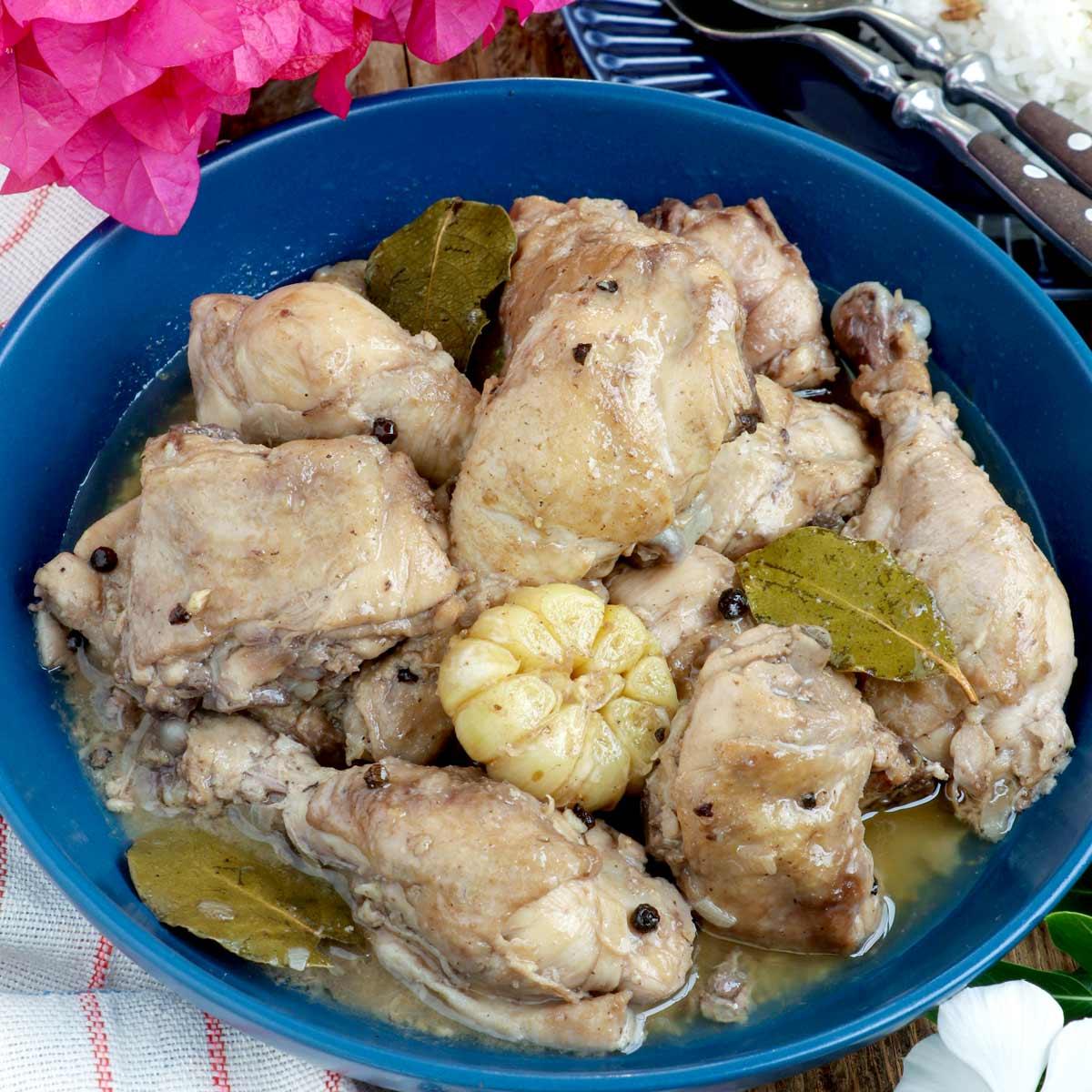
Unlike the dark-brown adobo familiar to many households, adobong puti is traditionally prepared without soy sauce. Instead, its flavor comes from vinegar, salt, garlic, black peppercorns, and other seasonings used according to the cook’s preference. The finished dish is generally lighter in color, allowing the natural appearance of the meat and the pale cooking liquid to remain visible.
Although its appearance is simpler, adobong puti can be remarkably flavorful. Vinegar gives the dish its characteristic tang, garlic adds fragrance, and black pepper contributes warmth. When prepared with pork, the rendered fat can create a rich, satisfying sauce. Chicken produces a different result, with a lighter texture and a broth that can be enjoyed over rice.
For Filipinos who grew up eating the darker version of adobo, discovering adobong puti can feel like discovering a familiar dish all over again.
It also raises an interesting question: how much of what people consider essential to adobo is actually essential?
Adobong puti demonstrates that soy sauce is not required for every interpretation of this classic Filipino cooking method. It offers a different expression of the same broad culinary tradition and reminds us that Philippine cuisine is built on many family recipes, regional practices, and changing tastes.
This article explores the ingredients, cooking techniques, historical context, recipe variations, and cultural significance of adobong puti.
What Is Adobong Puti?
Adobong puti is a Filipino adobo preparation made without soy sauce. Its name translates approximately to “white adobo,” referring to its lighter appearance compared with soy-sauce-based versions.
The word puti means white in Filipino. However, the finished dish does not necessarily look pure white. Depending on the ingredients and cooking method, the meat may appear golden or light brown, while the cooking liquid can range from nearly clear to pale amber.
The essential distinction is the absence of soy sauce, not a requirement that every ingredient or the finished sauce be white.
A common preparation uses pork or chicken cooked with vinegar, salt, garlic, and black peppercorns. Some recipes include bay leaves, while others incorporate fish sauce, onions, or additional aromatics.
Cooks can prepare adobong puti as a moist braise with plenty of cooking liquid or reduce the sauce until it coats the meat. Some finish the meat by frying it after simmering, producing a firmer exterior and a more concentrated flavor.
The Philippine National Nutrition Council identifies adobong puti as a variation made with vinegar, garlic, and peppercorns without soy sauce. Its description reflects the basic principle behind the dish while leaving room for individual recipes.
Source: National Nutrition Council — What Makes an Adobo Dish an Adobo?
The History of Adobong Puti
Understanding adobo before discussing its origins
The history of Filipino adobo is closely connected to the use of vinegar in Philippine cooking.
Vinegar is made from fermented ingredients, including coconut sap and sugarcane. Traditional Philippine varieties also include vinegar associated with nipa and other palm sources. These ingredients have long been used to provide acidity and distinctive flavor in everyday dishes.
Vinegar-based cooking is part of a broader culinary tradition that includes preparations such as kinilaw and paksiw. Although these dishes differ from one another, they demonstrate the longstanding importance of acidic ingredients in Filipino cuisine.
Adobo is one expression of that tradition.
The modern dish commonly involves simmering meat, seafood, or vegetables with vinegar and seasonings. Soy sauce is common in many familiar versions, but it is not used in every preparation.
Why adobong puti is associated with older cooking traditions
Some food writers and culinary historians describe adobong puti as a form closer to earlier vinegar-and-salt preparations because it does not depend on soy sauce.
Before modern bottled condiments became commonplace in household kitchens, cooks worked with locally available ingredients and seasonings. Vinegar and salt could provide flavor, while simmering helped soften meat and develop the cooking liquid.
These similarities make adobong puti a useful way to explore the broader history of Filipino adobo.
However, an important distinction must be made: it is difficult to establish that today’s adobong puti recipe is exactly the same as a particular precolonial preparation. Written evidence about early everyday cooking is limited, and recipes evolve as ingredients, technologies, and tastes change.
It is therefore more accurate to describe adobong puti as a variation that preserves the vinegar-and-salt principle than to claim that one modern recipe definitively reproduces the original adobo.
Where did the word “adobo” come from?
The word adobo is linked to the Spanish verb adobar, which means to marinate or season food.
The term was recorded in a Tagalog dictionary compiled in 1613 by the Spanish Franciscan missionary Pedro de San Buenaventura. The entry referred to a local preparation as adobo de los naturales.
This historical record helps explain how the name became associated with the dish during the Spanish colonial period. It does not prove that Spanish cooks invented the vinegar-based cooking method used in the Philippines.
Food historians have offered different interpretations of how Filipino adobo developed, including discussions of indigenous cooking practices and historical cultural exchange. Its precise origins remain a subject of debate.
The same caution applies to adobong puti. Its ingredients and cooking method provide clues about culinary traditions, but they cannot establish one definitive origin story.
For further reading, see Tourism Philippines — Adobo: What It Is and Its History.
The Essential Ingredients of Adobong Puti
One of the appealing features of white adobo is its relatively simple ingredient list. Because soy sauce is omitted, the other ingredients play an important role in creating a balanced dish.
1. Vinegar
Vinegar gives adobong puti its characteristic acidity.
Cooks may use coconut vinegar, cane vinegar, or another suitable food vinegar. Different varieties can contribute slightly different aromas and levels of sharpness.
Coconut vinegar may have a distinctive fermented character, while cane vinegar is another familiar choice in Philippine cooking.
The amount of vinegar depends on the recipe and the cook’s preferences. Some people like a strong, sharp flavor, while others prefer a mellower sauce that balances acidity with the richness of the meat.
2. Salt
Salt replaces much of the seasoning role that soy sauce plays in darker adobo.
Without soy sauce, the dish lacks the same dark color and some of the condiment’s savory complexity. Salt nevertheless provides the basic seasoning needed to bring out the flavors of the meat, garlic, and vinegar.
The amount should be adjusted carefully, particularly when using salty ingredients such as fish sauce or commercial seasoning products.
3. Garlic
Garlic is one of the most recognizable flavors in Filipino adobo.
Some cooks use a whole head of garlic, while others prefer a smaller quantity. Lightly crushing the cloves helps release their aroma while allowing the pieces to remain visible in the finished dish.
Garlic can be sautéed before the meat is added or simmered directly with the other ingredients. Browning it lightly creates a deeper flavor, but excessive browning can make it bitter.
4. Black peppercorns
Whole black peppercorns give adobong puti a warm, aromatic quality.
They can be used whole for a gentler flavor or lightly crushed for a stronger pepper presence. Ground black pepper is also possible, although whole peppercorns are common in many familiar adobo preparations.
5. Bay leaves
Bay leaves are frequently used in adobo, including some white adobo recipes.
They contribute a subtle herbal aroma that complements the vinegar and garlic. However, they are not mandatory in every version, and household recipes may omit them.
6. Pork or chicken
Pork and chicken are popular choices for adobong puti.
Pork belly produces a rich dish because of its fat content. Pork shoulder offers a balance of meat and fat, while leaner cuts produce a different texture and may require closer attention to prevent dryness.
Chicken thighs and drumsticks work well because they remain relatively tender during simmering. Other cuts can also be used if the cooking time is adjusted.
7. Optional seasonings
Some cooks add onions, fish sauce, or other aromatics. These ingredients can create a different flavor profile without necessarily changing the defining soy-free character of the dish.
There is no single mandatory list of optional ingredients for every household recipe. The important point is to retain the desired balance of vinegar, salt, garlic, and the main ingredient.
Adobong Puti Recipe: Traditional Filipino White Pork Adobo
This home recipe provides a practical starting point for preparing adobong puti. It uses pork, vinegar, salt, garlic, and peppercorns without soy sauce.
The quantities can be adjusted to suit your taste, but the recipe is designed to produce a flavorful dish with tender meat and a light, tangy sauce.
Preparation time: 15 minutes
Cooking time: Approximately 60–90 minutes
Servings: 4–6
Ingredients
- 1 kilogram pork belly or pork shoulder, cut into serving-sized pieces
- 1/2 cup coconut vinegar or cane vinegar
- 1 to 1 1/2 cups water, as needed
- 10–12 cloves garlic, lightly crushed
- 1 teaspoon whole black peppercorns
- 2 bay leaves, optional
- 1 teaspoon salt to start, then adjust to taste
- 1 tablespoon cooking oil, optional, for browning
- Steamed white rice, for serving
Note: This recipe contains no soy sauce. If you use a different vinegar or a particularly salty cut or seasoning ingredient, adjust the salt and liquid to suit your taste.
Step 1: Prepare the pork
Rinse or prepare the pork according to your usual food-safety practices, then pat it dry with clean paper towels.
Cut the meat into pieces of roughly similar size so they cook evenly.
Pork belly produces a rich sauce because its fat renders during cooking. Pork shoulder is a useful alternative for readers who prefer meat with less fat.
Step 2: Brown the meat if desired
Heat the cooking oil in a heavy-bottomed pot over medium heat.
Add the pork in batches and brown the pieces lightly on several sides. Avoid crowding the pot, as overcrowding can cause the meat to steam rather than brown.
Browning is optional. Some cooks prefer to simmer the meat directly with the vinegar and seasonings, while others enjoy the additional flavor developed through searing.
If using pork belly with plenty of fat, you may need little or no additional oil.
Step 3: Add the garlic and seasonings
Return all the pork to the pot if you browned it in batches.
Add the crushed garlic, black peppercorns, bay leaves if using, vinegar, and water.
Add the initial amount of salt, reserving the opportunity to adjust the seasoning later.
Bring the liquid to a boil. Allow the vinegar to boil briefly before reducing the heat, following a common approach used in many adobo recipes.
Avoid allowing the pot to boil vigorously for too long, as excessive evaporation may leave insufficient liquid for the meat to become tender.
Step 4: Simmer until tender
Reduce the heat to low and cover the pot partially.
Allow the pork to simmer gently, checking it periodically and turning the pieces so they cook evenly. Add small amounts of water if necessary to prevent the liquid from disappearing before the pork becomes tender.
Cooking time depends on the cut, the size of the pieces, and the heat level. Pork shoulder may become tender at a different rate from thick pieces of pork belly.
Continue cooking until the pork is tender and easy to bite through.
Step 5: Adjust the flavor
Taste the cooking liquid once the meat is tender.
If the sauce is too sharp, continue simmering gently to allow the flavor to mellow. If it tastes too mild, add a little more vinegar or salt, making small adjustments at a time.
Remember that reducing the liquid concentrates both the acidity and the saltiness. It is better to adjust gradually than to add too much seasoning at once.
Step 6: Reduce the sauce
If you prefer a concentrated white adobo, remove the lid and allow the liquid to reduce.
The sauce may become pale amber or lightly golden as it concentrates. This is normal and does not mean the dish has stopped being adobong puti.
Some cooks prefer to leave plenty of broth, while others reduce it until it clings to the meat.
Step 7: Serve with steamed rice
Transfer the pork and sauce to a serving dish.
Serve hot with steamed white rice, spooning a little of the cooking liquid over the rice if desired. A side of sautéed vegetables or fresh sliced tomatoes can complement the dish.
For a crispier variation, the simmered pork can be removed and briefly fried in a separate pan before serving. This produces a different texture while retaining the flavors developed during the braising process.
Refrigerate leftovers promptly in a covered container. Do not rely on vinegar alone to keep cooked meat safe at room temperature.
Chicken Adobong Puti: A Lighter Alternative
Although pork is a familiar choice, chicken works very well in white adobo.
Chicken thighs and drumsticks are particularly suitable because they can withstand simmering without becoming dry as quickly as lean breast meat.
For a simple chicken version, replace the pork with approximately one kilogram of chicken pieces. Use the same basic combination of vinegar, garlic, salt, black peppercorns, and optional bay leaves.
Chicken generally cooks more quickly than pork. Simmer until the meat is tender and reaches an internal temperature of 165°F (74°C), measured at the thickest part without touching the bone.
Some recipes brown the chicken before simmering, while others add it directly to the cooking liquid. Both methods can work, depending on the texture and flavor you want.
A chicken version often produces a lighter sauce than pork belly adobo because it may release less fat. However, the final appearance depends on the chicken cut, browning, and how much the sauce is reduced.
How Adobong Puti Differs from Regular Adobo
The most obvious difference is color, but the distinction involves more than appearance.
Color
Soy-sauce-based adobo generally develops a dark brown sauce. Adobong puti usually remains much lighter because soy sauce is omitted.
Flavor
Dark adobo often has a strong salty, savory flavor associated with soy sauce. White adobo emphasizes vinegar, garlic, salt, and the natural flavor of the meat.
Neither version has a fixed flavor profile. The type of vinegar, amount of salt, cooking time, and meat used can change the final result considerably.
Ingredients
Traditional white adobo does not use soy sauce. Some recipes use fish sauce or other seasonings, while others rely on salt alone.
Dark adobo commonly uses soy sauce, although household recipes vary in the amount and other ingredients.
Cooking methods
Both versions can be simmered until tender, reduced to concentrate the sauce, or finished by frying the meat.
The cooking method is flexible. As the Philippine Department of Trade and Industry’s Bureau of Philippine Standards explained in its discussion of adobo standardization, the dish encompasses a range of ingredients and cooking techniques across the country.
Source: DTI Bureau of Philippine Standards — Standardization of Famous Filipino Dishes Advances
Is Adobong Puti More Authentic Than Dark Adobo?
This question appears frequently in discussions about traditional Filipino food.
Some cooks and food writers consider white adobo closer to older vinegar-and-salt cooking practices because it does not rely on soy sauce. That interpretation is understandable, particularly when examining the long history of vinegar in Philippine cuisine.
However, authenticity is not always a matter of identifying one recipe as the only correct version.
Filipino adobo has developed through generations of cooking, and different families have their own ways of seasoning and preparing it. Soy-sauce-based adobo is also deeply established in Filipino households and is a legitimate part of the country’s food culture.
The more useful distinction is that adobong puti preserves a particular ingredient combination and cooking approach. Its importance does not depend on proving that every other version is less authentic.
The diversity of adobo is precisely what makes it worth documenting.
Regional Traditions and Family Variations
It is tempting to assign every Filipino dish to a particular province, but food traditions do not always follow neat geographical boundaries.
Adobong puti is better understood as a preparation that can appear in different households and communities rather than a recipe belonging exclusively to one region.
White adobo in the context of the Visayas
Vinegar plays an important role in many Visayan dishes, and the region has diverse traditions involving seafood, meat, and locally produced vinegar.
White adobo can fit naturally into this broader food context. Nevertheless, it would be inaccurate to claim that all Visayan households prepare adobong puti in the same way or that it originated exclusively in the Visayas.
Recipes may differ in the type of vinegar, the amount of garlic, the choice of protein, and whether the cooking liquid is retained or reduced.
White adobo and northern Philippine cooking
Northern Luzon has its own varied culinary traditions, including dishes in which meat is seasoned with salt, vinegar, and other locally available ingredients.
Some soy-free adobo preparations overlap with these broader approaches to seasoning and cooking meat. But similar ingredients do not establish a single regional origin, and a white adobo recipe should not automatically be labeled as exclusively Ilocano or associated with one province without specific evidence.
Family recipes throughout the Philippines
Perhaps the most important source of variation is the household itself.
One family might prefer a sharp, vinegar-forward sauce. Another might use more garlic and allow the pork to become almost dry. A third might add fish sauce or finish the meat in hot oil.
These choices may reflect personal preference, ingredients available in the local market, or the way a parent or grandparent taught the recipe.
Rather than forcing each variation into a rigid regional category, food writers can preserve the story of how the dish is actually prepared and remembered.
Common Mistakes When Cooking Adobong Puti
Adding too much salt
Without soy sauce, it may be tempting to add excessive salt to compensate. However, salt should be added gradually and adjusted after the cooking liquid has reduced.
Allowing the pot to become too dry too early
Pork needs time to become tender. If all the liquid evaporates before the meat is ready, the bottom of the pot may burn.
Keep the heat low and add small amounts of water when necessary.
Using too much vinegar without balancing the flavor
The correct amount depends on the vinegar’s acidity and the cook’s preference. If you are unfamiliar with a particular vinegar, begin with the recipe quantity and adjust toward the end.
Expecting the sauce to be completely white
The name describes a soy-free preparation, not a strict color requirement. Browning, meat juices, and reduction can give the sauce a golden or amber appearance.
Assuming every traditional recipe must contain bay leaves
Bay leaves are common in many modern adobo recipes, but individual preparations differ. They are optional in the recipe presented here.
Frequently Asked Questions About Adobong Puti
What does adobong puti mean in English?
Adobong puti means “white adobo.” It refers to an adobo preparation made without soy sauce, resulting in a lighter appearance than many familiar dark adobo recipes.
What are the main ingredients of adobong puti?
The basic ingredients are vinegar, salt, garlic, black peppercorns, and meat such as pork or chicken. Bay leaves are frequently included, but their use varies.
Can I cook adobong puti without soy sauce?
Yes. Omitting soy sauce is the defining feature of traditional adobong puti. Salt provides seasoning, while vinegar and garlic contribute its characteristic flavor.
Is adobong puti made with pork or chicken?
It can be made with either. Pork belly produces a rich dish, while chicken offers a different texture and often cooks more quickly. Other proteins can also be prepared using the same broad method.
Is adobong puti an original precolonial Filipino dish?
It is often described as resembling earlier vinegar-and-salt cooking practices. However, the precise origins of the modern recipe are difficult to establish, and there is insufficient evidence to claim that every present-day version is identical to a precolonial dish.
Which vinegar is best for white adobo?
Coconut vinegar and cane vinegar are both suitable options. The best choice depends on the flavor you prefer and what is available. Different vinegars can vary in acidity and aroma, so adjust the quantity to taste.
Can I use fish sauce instead of salt?
Yes, some recipes use fish sauce to provide seasoning and savory depth. However, fish sauce adds its own flavor and saltiness, so begin with a small amount and adjust carefully.
Is adobong puti healthier than regular adobo?
Not automatically. Omitting soy sauce may change the amount of sodium in a recipe, but the final nutritional profile depends on the quantity of salt, type and amount of meat, cooking oil, portion size, and other seasonings.
A soy-free recipe can still contain substantial sodium if too much salt or fish sauce is added. For specific dietary needs, compare the actual ingredients and quantities rather than relying on the dish’s name.
What should I serve with adobong puti?
Steamed white rice is the classic accompaniment. Sautéed vegetables, fresh tomatoes, or other simple side dishes can complement its tangy, savory flavor.
Can I store leftover adobong puti?
Yes. Refrigerate leftovers promptly in a covered container and consume them within three to four days. Reheat thoroughly before serving. Vinegar does not make cooked meat safe to leave unrefrigerated indefinitely.
Conclusion: A Different Expression of a Filipino Classic
Adobong puti deserves a place in any exploration of Filipino adobo because it reveals how much flavor can come from a small number of ingredients.
Without soy sauce, the dish places vinegar, garlic, salt, and the natural character of the meat at the center of the cooking process. The result can be sharp and tangy, rich and comforting, or deeply savory, depending on the ingredients and technique.
Its significance also extends beyond the kitchen. Adobong puti offers a way to examine the history of vinegar-based cooking, the evolution of Filipino food, and the diversity of family recipes across the archipelago.
It is important not to overstate its origins or claim that one province owns the dish. Its history is part of the larger, still-evolving story of Philippine cuisine, shaped by local ingredients, historical influences, and generations of home cooks.
For anyone familiar with the dark, soy-sauce-based version of adobo, white adobo is an invitation to explore another side of a beloved dish.
Sometimes, a change as simple as leaving out one ingredient is enough to reveal a whole new dimension of Filipino cooking.
Sources and Further Reading
- National Nutrition Council, Republic of the Philippines. “What Makes an Adobo Dish an Adobo?”
https://nnc.gov.ph/mindanao-region/what-makes-an-adobo-dish-an-adobo/ - Tourism Philippines. “Adobo: What It Is, History and How to Eat It.”
https://www.turismofilipinas.com/en/food-in-philippines/adobo - Department of Trade and Industry, Bureau of Philippine Standards. “Standardization of Famous Filipino Dishes Advances!” Published July 12, 2021.
https://bps.dti.gov.ph/press-releases/283-standardization-of-famous-filipino-dishes-advances - Simpol. “Adobong Puti Recipe.” Published May 14, 2024.
https://www.simpol.ph/adobong-puti/ - Kawaling Pinoy. “Adobong Puti (White Pork Adobo).”
https://www.kawalingpinoy.com/adobong-puti/
Editorial note: This article presents a home-cooking recipe and a general cultural overview. It does not claim that the recipe is the sole authentic version or that adobong puti originated exclusively in a particular Philippine region. Ingredient quantities and cooking techniques may differ across households.
Suggested featured image alt text: Filipino adobong puti made with tender pork, vinegar, garlic, salt, and whole black peppercorns, served with steamed white rice.
Suggested social media excerpt: Meet adobong puti, the Filipino white adobo that celebrates the bold flavors of vinegar, garlic, and pepper without soy sauce. Discover its history, learn how to cook it at home, and explore the family traditions behind this distinctive Filipino dish.